November 19, 2010

Being Like Bob.


I was not surprised when Ms. Kinney told me she wanted to bring her husband of 30 years along on her trip to Morocco.

It was, however, a surprise that he was 93 and able to travel well. My father would have not wanted to go anywhere at 90; he was quite content to stay at home.

Bob Kinney, on the other hand, was ready to go. Each morning in Morocco Bob showed up for breakfast bright eyed. I would ask him, "How are you?" and he would say, "I'm fine! Just happy to be alive! You know, I never expected to live this long."

I asked him, do you have a motto? He replied with certainty, "Do it now." That's different than "Just Do It," I thought. "Do It Now" means that we have no time to waste on not doing, on complaining or sitting around feeling sorry for ourselves. He seemed to understand the "go with the flow" mentality that my guests must slip into, once they realize that I am absolutely in charge not only of our itinerary, but also of their relaxing.

Bob was born in Maine and still speaks of it fondly. He wasn't drafted into the war, as he was better suited to run a certain food company called "General Mills." He would have liked to go straight into officer's training, but stayed home instead to his company like a tight ship. "You must put the responsibility of the product into the hands of the workers. This way, you will always have them listening and working on your behalf, because they feel invested in the success of the company." Bob was in charge of 120,000 employees.

It was with that same spirit and dedication that he accompanied his wife Margee, equally adventurous and enthusiastic about everything, on this fall's program to Morocco. Bob's other motto was, "Say YES to everything." Even riding up to 6,000 ft, to the Kasbah du Toubkal in the Atlas Mountains, on the back of a mule. I was more reluctant at first, having had folks 10 years his junior not comfortable with such a thing. Bob is not a jock, but he has a lot of joie di vivre.


He stayed well the whole trip and delighted us all. On our final night, he was even up dancing alongside the belly dancers. I asked, "Okay Bob, which was more exciting: the mule ride up and down the steep slopes or belly dancing with those lovely women?" He looked at me shyly and said, "The belly dancers for sure!"

I'm printing tee shirts that say, "Be like Bob." Happy to be alive. We should all take that as our motto for living a long life.

Giving thanks for all that we encounter and for the incredibly inspiring people I get to meet on my trips.

Here's a toast: Crumbs on tongues! Sips on lips! Wild Adventures at home and on trips!

With love and wishes for a Happy Thanksgiving,

Peggy

November 12, 2010

Bahija's Pineapple Upside-Down and Turned Around Date Cake

Bahija Lafredi's sensibility for the extraordinary in food, never ceases to amaze me. It comes easy to her.  Unpretentious in her kitchen whites or traditional tunics, she is like a neutral book cover to a colorful, classic novel. Full of surprises, her imagination takes something as simple as a sponge cake and dresses it to the nines with a flip of the wrists.


This basic pineapple upside-down cake came out of the oven beautifully caramelized and mouthwatering. It would have pleased a Queen. Then Bahija said, 'but if you like, you can turn half of it over'. The underside was studded with dates and almonds. Quite a contrast to the yellow caramelized pineapple. She studied it for a minute, then got an idea to quarter it. What started out as a festive cake, now became more so~ A work of art and a feast for the eyes.

Cooking is not always about following a recipe. It's about learning to follow someones way of seeing.


BAHIJA’S PINEAPPLE UPSIDE-DOWN AND TURNED-AROUND DATE CAKE

9 eggs
200 grams flour (1 cup)
200 grams of butter
100 grams of sugar (1/2 cup)
6-8 apples ( pears optional)
1 pineapple
1 cup of sliced, pitted and chopped dates
1 cup of slivered almonds
2 T orange or strawberry marmalade 
2 T baking powder
a pinch of salt

caramel sauce:
100 grams sugar
Melt the sugar on a low flame until it turns a clear light brown. Pour the sauce to coat the bottom of a ring mold, or springform pan. (Caution! Sauce is very hot!)
  
Slice the fruit and put around the pan. Pineapple first, then the apples.

Batter:
Beat the eggs with the butter, salt and sugar.
Mix baking powder with the flour, then add to wet ingredients and mix well.

Pour the batter over the fruit. Decorate the top with the chopped dates and almonds.

Bake for 30 minutes at 350F. Check for doneness with a toothpick. Invert the cake carefully!
      
If you want to make the presentation more interesting, cut the cake in quarters and turn only half of it over. You will have pineapple upside down cake on one side, and dates and almonds on the other.


October 25, 2010

Fig and Walnut Tapenade


1 cup chopped dried Calimyrna figs (or one's you've dried yourself)
1/3 cup water
1/2 cup pitted Kalamata olives, chopped
2 T extra-virgin olive oil
1 T balsamic vinegar
1 T drained and rinsed capers, chopped
1 1/2 t chopped fresh thyme
1/2 cup toasted and chopped walnuts

Combine figs and water in a heavy medium saucepan. Cook over medium-high heat until liquid evaporates and figs are soft. About 7 minutes. Transfer to bowl and add the rest of the ingredients.
Season to taste with salt and pepper if it needs it.

Serve with manchego or a soft goat cheese on crostini.

Recipe by Kim Schiffer. Recipe made by Ashley Mulligan in the hills of the Alpujarras, Spain.

October 20, 2010

"She Gets Around."


Florence-Pisa-London-Florence-Barcelona-Mallorca-Malaga
 
I'm in constant motion, and do get around. There’s my work, first and foremost, that takes me around, and then I fill in the blanks on the way. Why not? A London birthday party one weekend stretches into the next, with a sack of things to do and places to see in-between. An oyster card can take you anywhere in the city with a touch of "glass," so to speak, as long as you know where you're going...or not.  London is vast. But when I did figure it out, I felt like a queen.

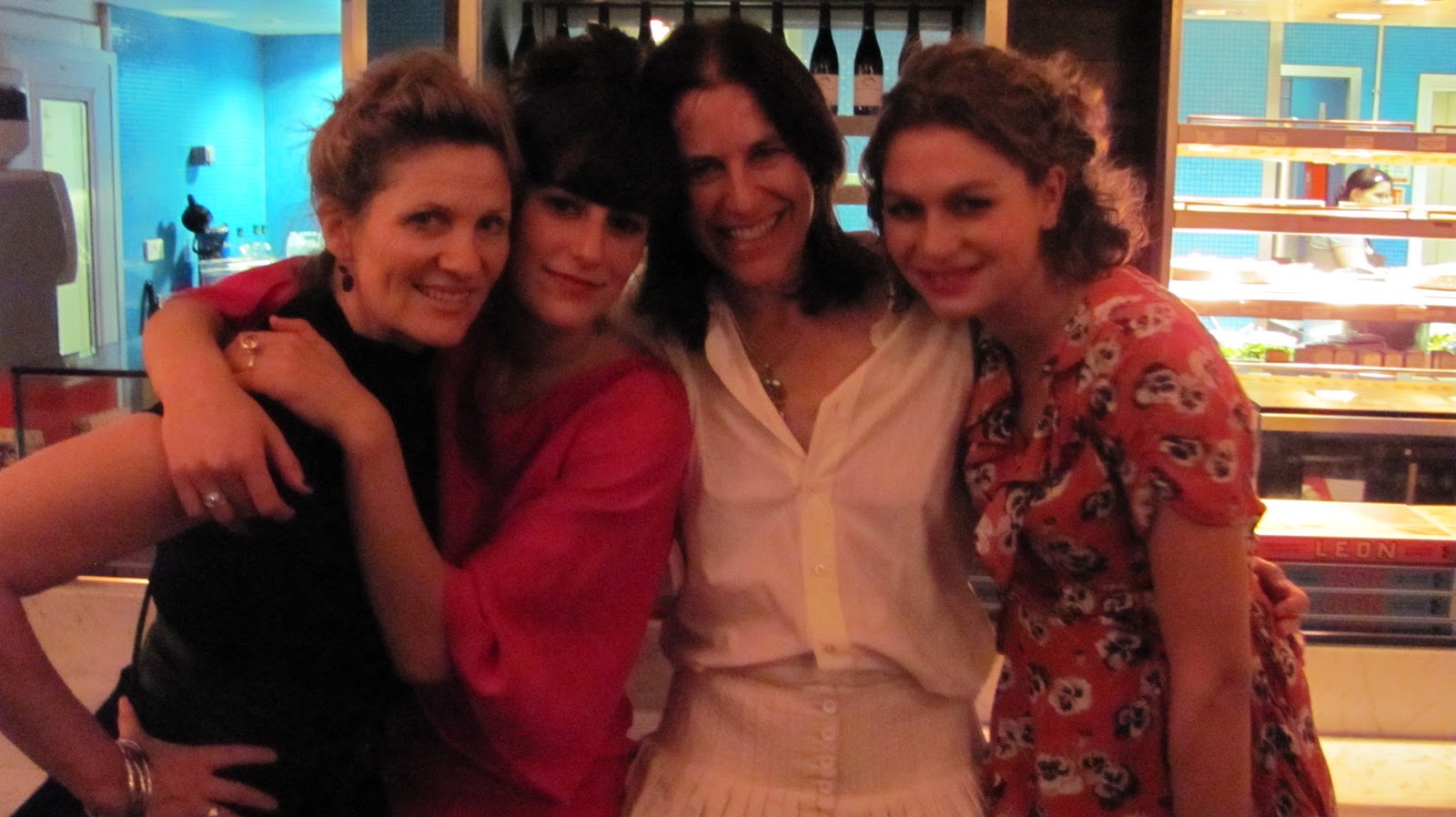
My friend Lori's 50th was no small fete. Her husband Jason, one of London's fab food photographers, pulled out all the stops not only for his sweetie, but for his lovely daughter Rae's 16th as well. One hundred and fifty people graced tables on an off night at Leon. Jason (with family prep) did all the cooking—Turkish, inspired by a recent trip.

September 22, 2010

Culinary Travels in India: Sharpura bargh

I traveled by car again, to the sweet haven of Sharpura Bargh. A private boutique guesthouse halfway between Udaipur and Jaipur. Shaturgeet and Maya Singh, the owners, greeted me like an old friend.


Maya’s warm welcome was lovely and personal. (Royal butlers can get a bit much after a while.) A warm embrace in the simple countryside goes a long way. Though my visit to the palace "god-realm," had been fun for a while. I felt at home in this 120-year-old country residence on 45 acres, surrounded by gardens and lakes. It had the magic combo for me of elegance, simplicity, genuine hospitality and good home cooking from an organic vegetable garden.

Sat, the photographer Prince, took us on a jeep safari of his grandfather's land, the late Rajadhiraj Nahar Singh of Sharpura, who mortgaged the family’s private property and jewels to bring water to his people. In the end, he created 250 acres of wetlands, defying all odds that he would be able to build the right dams.

We rode through the town slowly as everyone bowed respectfully to Sat. He of course waved back kindly. The children were so polite! Maybe because we were with him, we did not encounter the usual hands out asking for candy or money. Instead genuine smiles from the children. I asked him how was that possible? What was different in this town? And he replied that they take good care to empower the rural children with books and educational grants. He seemed well loved by the villagers and he told me, ‘I love to walk down the street with my camera and take photos, but some of the village men say, ‘Your highness, the King, your grandfather would not approve sir. You can drive in your car and get out take a photo, but you mustn’t just walk down the street, sir.’ Sat said he realizes that they still live with that respect and he with all humbleness, obeys. It said something about honoring an old system that still seems to be intact, rather than elitism.


It was a narrow, yet busy street with shop-owners hard at work selling dry goods as well as sweets, being cooked right on the spot. There was a huge metal bowl cooking milk and sugar to the delight of a small boy dancing around waiting for what would come of it. There were women at the well, women selling vegetables and fruits on the ground, men with various colored turbans pushing fruit carts and riding their children around on the handlebars of their bicycles. It was a happy place.


Sat drove us through Gypsy villages and viewed a few of the lakes with a dry bed. The villagers were out harvesting wheat like dots of moving color. The plains were vast. We also visited a stable gypsy village. Gypsy’s are nomadic and originated from Rajasthan. Here they had been granted some land and they were quite settled and happy. Although he did caution us, "I can’t leave my jeep for very long. Something is always sure to be missing."

We bird watched in the 100 year old mango and guava orchards. A daylight owl was sleeping in a 300 year old Banyan tree. We got out to have tea in the orchard. Sat gave us all muslin to keep close. He said, "throw this over you if you don’t want to get stung." The bees were swarming that time of year. We left soon after. It added a bit of adventure to the safari.


Back at Sharpura, we sauntered into the kitchen with the family cook. He prepared a local dish of Gatta ki Sabzi, a chick pea flour gnocchi as it were, cooked in a spicy sauce. It came out rope like, then cut into small bite sizes like gnocchi. The display of the spice tray common in all Indian kitchens becomes comforting after a while. It’s a distinct element in their identity.

I looked around at the cabinetry. It was charming, useful and old. Something we Americans would never see. Two young helpers were present and quiet as mice. One was filling water pitchers from the terracotta jug. All homes, even Royal ones keep the water fresh, contained in terracotta on a stand in the kitchen.


A beautiful young girl dressed in a peacock blue saree washed up the dishes. She stood by silently with a shy smile. We dined with the uncle, brother to the king and a force in his own right, and Sat’s mother. Next time around she’ll give us a tea tasting.

Learn more about our 12-day culinary program in India

September 21, 2010

Culinary Travels in India: Devigarh


Devigarh, my favorite place aesthetically, is an 18th century Palace fort that royally commands the valley, looking out over the Aravalli hills. Bo-chic in style, the interiors are minimalist yet traditional, leaving more out than put in. An awesome aesthetic, if you like austere five-star elegance—a bit "Indian Zen."


The surrounding natural landscape offers solace. The colorful village below, with intermittent baby blue houses, offers charm. The color motive is two-fold. It keeps insects and bugs away and praises lord Krishna at the same time.

The lifestyle of the villagers has not changed much, at least to the western eye, in what seems an eternity. Barefoot shop owners sit before scales on old wooden counters or on the floor. Some are turbaned, some are not.

Men sit on stoops, children run around, women carry food or water jugs on their heads and glide gracefully in their saris, sit as vibrantly colored as the fruits and vegetables they sell. Brahman humped cows wander the streets freely. Elders seem to indulge their children with laps and caresses rather than candy and material goods. The village astrologer sits on the corner, dressed in red next to a sky blue wall, waiting for a consultation. Carts of vegetables display simple local fare with names like "lady fingers" and "gentleman’s thumbs."

We followed some of the women through one doorway and found an old man making terra cotta pots used to store cool water. White hair and beard, he stooped and twirled his wheel with a stick. Once it got going to the speed he was happy with, he threw some clay in the middle and started molding. Three small pots were produced within minutes.


From what I could gather, the small village flowed from Muslim to Hindu, Jain to Tribal, although it was predominantly Jain. Extreme vegetarians, they wear no leather and avoid killing anything that moves, even going as far as to not eat roots, but only what grows above the ground. Their business is business—noted to be some of the wealthiest in India. They compensate this fact by giving back and supporting schools and communities with various projects. Visiting a temple on the way out, an old woman blessed us and helped us with an incense offering. The village and the gods are well looked after.

Back to Devigarh, we entered another dimension—simple, yet lofty luxury. In my room, a palace suite, a painting of a large lotus unfolded over the whole wall. The stunning countryside view was central to the bed rather than a television. The bathtub was full of rose petals, which I let lay. An aryavedic massage had left me with oils that I didn’t want to wash off.


Dinner was served in the "airy chamber;" a small room that extended from the wall of the fort with small open windows—candle-lit and cool. We ate thali and drank a glass of Indian Viognier. My friend Shoba and I discussed arranged marriages in India. What it was like to live in a large household with no privacy and the new wave of working women in India.

Our conversation was carried around the empty rooms of the Palace to the left and to the right, on the notes of water music—bowls of water with varying levels, played with sticks.

Getting into the kitchen the next morning, after a tasty mango lassi (yogurt drink) was a honor. Chef Manish Upadhyay was shy to show me a few of his favorite dishes, but we became fast friends. I marveled at his show of spices. He showed me a few south Indian dishes, with shrimp and coconut milk, but it was the makai pudina ki tikki (corn fritter) with mint and green chili sauce, that was my favorite. (I have made that dish several times now for friends and family. One restaurant owner wants it on his menu.)


We left reluctantly. Driving away, not half a kilometer, was a living scenario from 1,000 years ago. Women in typical Rajasthani red, orange and gold saree’s, were walking down the road with silver water jugs on their heads, headed towards a small well that was pumping water from oxen power. An old man sat on the back of small wooden-wheeled buggy driving them around and around, while an old water wheel scooped the water into strapped-on terracotta jugs and poured it into the hands of the villagers who were bathing and washing clothes. Bits of color bent and bobbed in the background. Women were gathered in the distance thrashing wheat.

Learn more about our 12-day culinary program in India

September 19, 2010

Culinary Travels in India: Udaipur and the Lake Palace Hotel

Udiapur is known as the city of Lakes.

The Lake Palace Hotel was conceived (in romance?) and built in 1746 by Marharana Jagat Singh II. It spreads across a four acre island, a complete vision of white marble.

Somewhat Venetian, the ground is not visible at all. It seems rather mythical and floating. One has to arrive by boat (anywhere one has to arrive by boat captures my attention) and I felt instantly transported into never-never land. Inside, royal butlers attended to my every need (even hooking up to modern day internet!). They stood with umbrellas as I waited for the boat under the Rajasthan heat. This was no Disney Land show. It is now exactly what it was several hundred years ago.


A turbaned flautist presided over the interior lily pond as I dined serenely alone, getting lost in the new flavors before me, my mind open and calm with a view to the lake.

Later, I visited the kitchen with awe. Here in this five-star hotel, they were cooking with wood fire. Not just in a deep tandoori oven, but in small painted terracotta ovens, that sat on the waist-high counter that housed the fire. Black terracotta cooking pots were settled over the bright coals. A flat stone girdled one of them, as a place to grill.

Fire is fire wherever you go, what is cooked is very similar. How it’s presented—who’s cooking it and to whom—are what distinguishes it. I asked the chef a few questions about his cooking, he said he was inspired by his grandmother. Cooking was just cooking to him, until it became noticed as a celebrated art as recent as the 70s.


I remember the presentation almost more than the food. I had eaten Indian food in America and England, but not in India. I realized that I was in a whole new realm of regional display. Palatial at that. It was easy to dream myself a Palace dweller. More than likely I would be in the kitchen, rather than wearing jewels in the Kings Court. But one never knows.

Raw mango puree with salt and mint.

Sarson Ke Phool: broccoli marinated in mustard paste and slow roasted sitting on crispy karum bread.


Soola Mung: Chicken marinated with chili and ground onion paste, salt, pepper, lemon juice, then grilled in a tandoori ovem.

Sangri: ongbeans, sliced and sauteed w/pickling spices mixed with dried fruit

Tnikri Dal: melange of three types of dal with garlic, ginger and chili's, cooked in an earthenware pot.


It was my first Indian meal presented on bone china. I was alone, and therefore, I was able to concentrate on these new flavors and indeed sink into their company. My own private concert with notes I had never tasted. Not only was I delighted, but intrigued. What was the genius that brought these spices together? Thousands of years of creativity and necessity. It was the greatest welcome. I did not feel alone at all.


After dinner, I was led through the City Palace, with it’s mirrored rooms and peacock mosaic archways. I started to get the picture of life in a place of this majesty and magnitude, impressed most by a swarm of bees that made a home on the side of a balcony.

No doubt royal bees.

Learn more about our 12-day culinary program in India